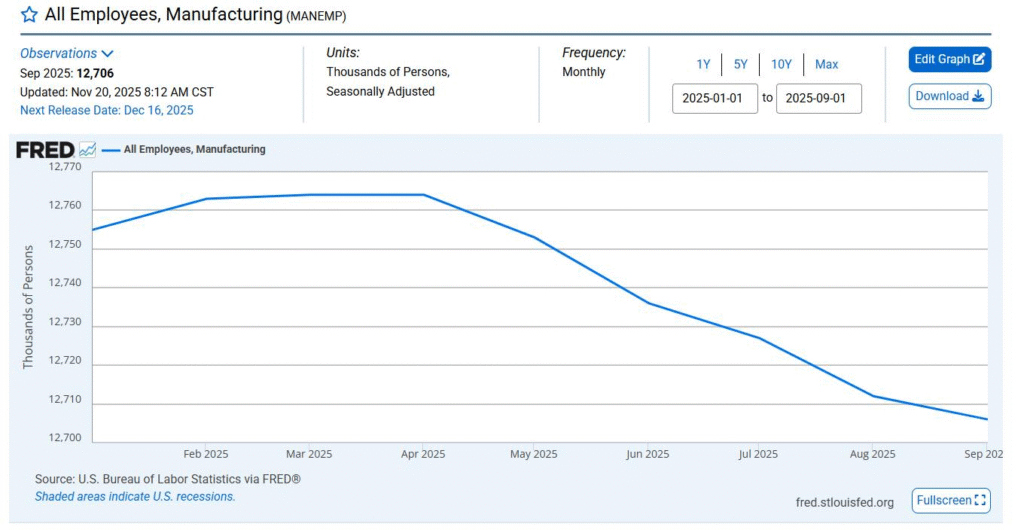
Numerous online commenters are sharing the chart above, which shows that since Liberation day, manufacturing jobs have been declining, not growing. Note the scale; this isn’t a huge drop (~50k+ jobs out of over 12.5M), but it’s down–not up–and Mr. Trump promised all these manufacturing jobs (“we’re bringing them all back”). The question is why. And the answer is what we warned early on about tariffs. Even if you (wrongly) believe this is going to be good for the economy in the long run, our economy is globally integrated, and most manufacturers everywhere in the world use globally-sourced inputs to production. So tariffs on imports that are inputs to U.S. manufactured goods production make those American made goods more expensive, which curtails the quantity demanded*, which both raises prices and reduces the need for more manufacturing workers. So the best case case scenario is that when this is all done (and it would take years to completely unwind the global supply chains we currently have) we’ll start to get growth in manufacturing output. But politically Mr. Trump doesn’t have years–he is less than a year away from being the lamest of ducks. This was never going to work, and the sooner Mr. Trump pivots and ends the uncertainty in our economy, the better.
* to my econ student readers, notice I didn’t say demand! You need to understand the difference! 🙂
 Bert Wheeler
 Jeff Haymond
 Marc Clauson
 Mark Caleb Smith
 Tom Mach